




The leverage of the safety squat bar used like this puts excellent tension on the side delts at the bottom of the press.
And even though the elbow IS bent quite a lot at the bottom, I find that the tension is primarily on the delts and not the tricep...which seems counterintuitive based on what the exercise LOOKS like.
There is some tricep involvement, but it doesn't hit like a tricep exercise.
I like this one for relatively higher reps.
In my experience (and for my shoulders), I find that moderately higher reps (8-10+) works better for me for shoulders. It puts lets torque on the shoulder joint itself and really lets me focus on form and delt activation rather than just trying to move weight.
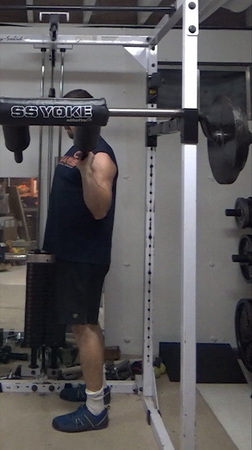
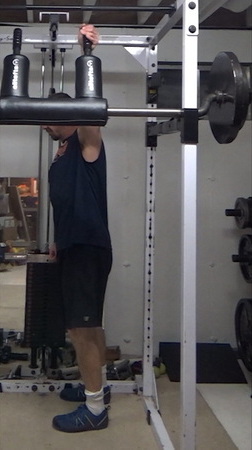
To do this one, set the safety rails fairly high in the rack...about even with your jaw. Set the safety squat bar on the rails, braced up against the uprights. The orientation of the bar should be the same direction as if you were going to do squats.
Stand perpendicular to the bar and grip one of the handles so that it's directly to your side.
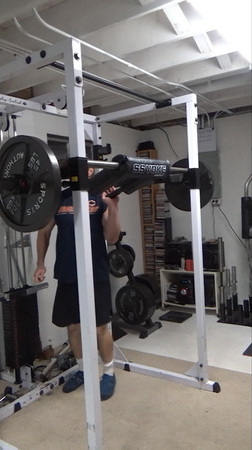
When you grip the handle and get into the bottom position of the press, you should feel some loading tension in that very bottom position already (handle at the 7 or 8 o'clock position). If you don't, lower the level of the rack rails a bit until you get it.
Now start the press.
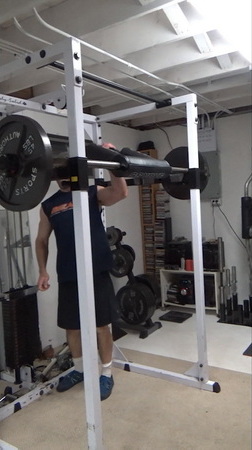
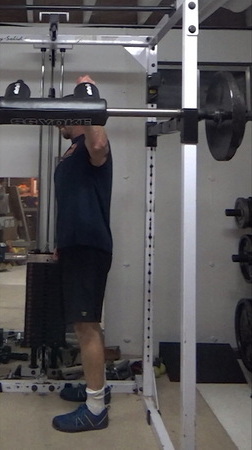
Press directly up and to the side, following the rotation of the bar. The movement resembles a Y press.
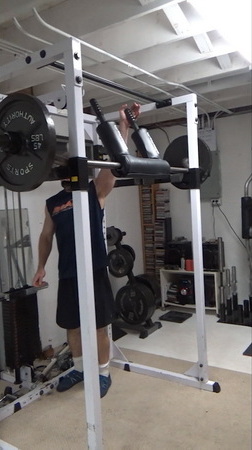
The real "money" part of this setup is the first half, coming up from the deep stretch start position. The resistance does drop off a bit as you pass the halfway mark, but there is still enough to make it worth completing the rep.
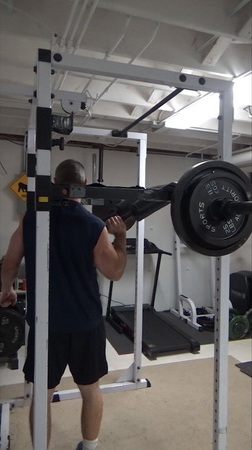
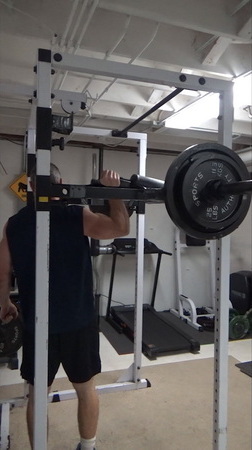
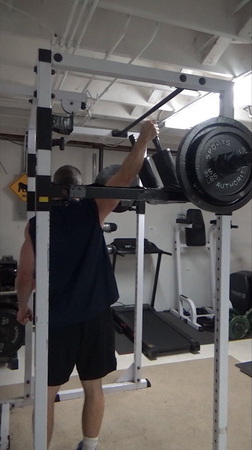
As you're doing reps, try and focus on really feeling that stretch loading at the bottom of each rep.
Here's a side view:
---
Are you 40...50...60 or even 70+ years old and want to build muscle and strength like you did 20 years ago?
If you feel like you're fighting a losing battle, you're ready to discover the REAL secret to REVERSING muscle loss due to aging...
*** You need to train the body systems that SUPPORT your muscle mass, not just the muscle itself. ***
These underlying support systems diminish as you age, which is why you lose muscle as you get older no matter how hard you train... but with strategic training, these systems can be regenerated.

Share This Page...
Want More Exercises Like This?
You'll find them here...
 Support